First off, my usual disclaimer and explanation.
This list is not meant to assess the thousands of good books published in the past year. This is simply a list of the books—Christian and non-Christian, but all non-fiction—that I thought were the best in the past year. “Best” doesn’t mean I agreed with everything in them; it means I found these books—all published in 2025—a strong combination of thoughtful, useful, helpful, insightful, and challenging. Undoubtedly, the list each year reflects my own interests and tends to be heavy on history and theology.
Instead of trying to rank the books 1-10, I’ll simply list them in alphabetical order by the author’s last name.
John U. Bacon, The Gales of November: The Untold Story of the Edmund Fitzgerald (Liveright)
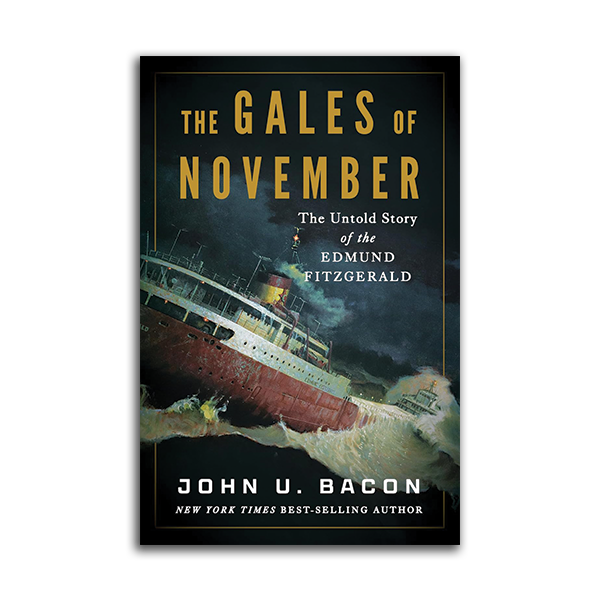
As a Michigander, I grew up hearing about the wreck of the Edmund Fitzgerald. And, of course, I’ve listened to the Gordon Lightfoot song about a thousand times. This book, by a veteran Michigan journalist, is briskly written and full of information—about shipping taconite and the Soo Locks and the life of a sailor (among other things)—that you didn’t know would be so interesting. It’s an ode to the Great Lakes as much as anything. Catnip for Midwesterners.

Matthew C. Bingham, A Heart Aflame for God: A Reformed Approach to Spiritual Formation (Crossway)
This is the book we have needed for a long time. Bingham mines the riches of the Puritans to make the point that there is a Reformed approach to spiritual formation and that this word-centered piety can serve as a necessary correction to other popular hodgepodge approaches.
R. Scott Clark, The Heidelberg Catechism: A Historical, Theological and Pastoral Commentary (Lexham Academic)
A big book about one of the best Christian works ever written. This is now the go-to resource for students, pastors, and serious Christians who want to understand the history and theology of the Heidelberg Catechism. We are going to preach through the Heidelberg during our evening service in 2026. I made sure to give all of our pastors a copy of Clark’s massive and insightful tome.
Allen C. Guelzo and James Hankins, The Golden Thread: A History of the Western Tradition, Volume 1: The Ancient World and Christendom (Encounter Books)
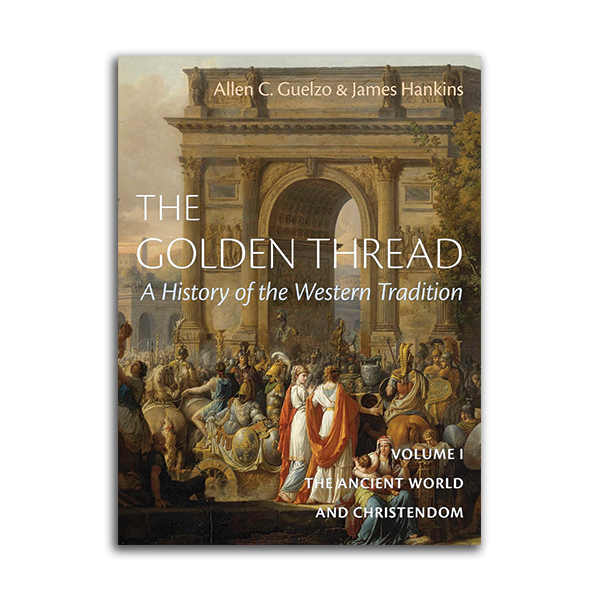
Why would anyone want to read a Western Civilization textbook? Well, once you thumb through the pages of The Golden Thread, you’ll wonder why anyone wouldn’t want to read such a book. The prose is lucid, and the design of the book is beautiful. We need more resources like this that pass along the history of the Western tradition with critical appreciation. A truly impressive feat. I’m eager for Volume 2.
Clair Hoffman, Sister, Sinner: The Miraculous Life and Mysterious Disappearance of Aimee Semple McPherson (Farrar, Straus and Giroux)
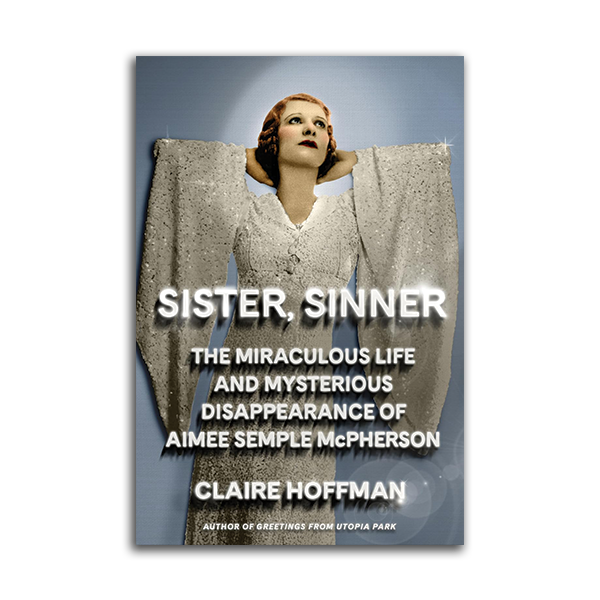
I don’t agree with charismatic, prosperity-lite theology or with women preaching, but Aimee Semple McPherson is one of the most fascinating women in American history. You wouldn’t believe Aimee Semple McPherson was a real person, except that she was, or that she had the biggest church in America, except that she did. The author knows nothing about theology and too often looks at Sister Aimee through the lens of twenty-first-century feminist concerns, but it is terrifically well-written, like a true crime story you can’t put down.
Robert Letham, The Eternal Son (P&R)
I’ve read many of Letham’s books over the years, and they all demonstrate a historical and theological mastery of the subject. Comprehensive and opinionated, Letham always teaches, guides, and provokes. I expect that I will consult this book for years to come.
Ignat Solzhenitsyn (ed.), We Have Ceased to see the Purpose: Essential Speeches of Aleksandr Solzhenitsyn (University of Notre Dame Press)
This is a brief and accessible on-ramp to the twentieth century’s most consequential political and cultural writer. It’s amazing—but I suppose shouldn’t be surprising—that these speeches still feel relevant decades later.
John Thomson, An Explication of the Shorter Catechism (Westminster Seminary Press)
S.A. Fix has done the church a great service by not only bringing Thomson’s neglected work into the light of day, but by providing such a learned and illuminating introduction to Thomson himself. Thomson’s Explication of the Shorter Catechism is a masterful example of orderliness, comprehensiveness, and eighteenth-century Old School piety. Both Fix’s introduction and Thomson’s commentary deserve careful reading and re-reading.
John G. Turner, Joseph Smith: The Rise and Fall of an American Prophet (Yale University Press)
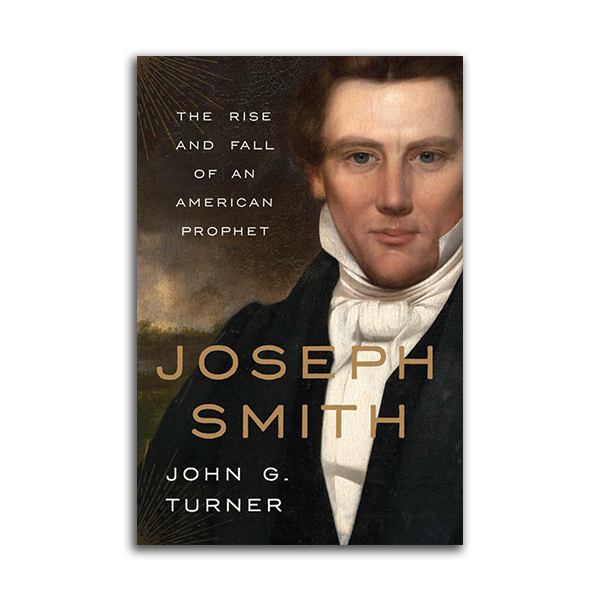
A well-written and fair-minded biography of one of America’s most significant religious figures—the man who claimed to be a seer, translator, prophet, and revelator, but was also a banker, prisoner, Master Mason, mayor, real estate speculator, indicted perjurer, and serial polygamist. The author mostly stays away from evaluating Smith, though it’s hard to think good thoughts about the Mormon prophet when he commits adultery with a young servant girl and later goes on to acquire nearly 30 wives, citing angelic visitations and divine revelation to convince young teenage girls that he has no choice but to marry them and consummate their eternally-sealed relationship—which Joseph did, on one occasion, with a 19-year-old nanny who lived in their home, while Emma was alone in her room, fully (and unhappily) aware of what her husband was doing.
Guy Prentiss Waters, One, Holy, Catholic, and Apostolic Church: The Biblical Doctrine of the Church (Lexham Academic)
This is a great entry into a great series. Half biblical exposition and half dogmatic exploration, Waters provides an orderly, conservative Presbyterian perspective (the right perspective!) on the major points of ecclesiology. Just the right depth and length.
Other Books
Since I love books, I can’t limit myself to only talking about books from 2025. Here are some other books I’ve enjoyed reading this past year.
As you can tell, my reading interests gravitate toward history and theology. Still, I try to always be working through a fiction book. This year, I read through The Space Trilogy and Till We Have Faces, both by C.S. Lewis. I had read the latter twice before, many years ago, but I liked it (and understood it) exponentially more the third time around. We read the book as a senior staff (the first time we’ve ever used a fiction book). I think everyone was surprised by how much they grew to love it. Discussing the book as a group helped a lot. I read The Space Trilogy as a kid, but didn’t get much out of it. The books are much more ponderous, slow-moving, and philosophical than The Chronicles of Narnia. Still, they are well worth reading (or re-reading) as an adult. The last two books—Perelandra and That Hideous Strength—contain deep insights into sex, gender, beauty, the importance of ordinary courage, and the importance of having children. For my next fiction book, I’m currently reading Watership Down by Richard Adams.
I’m excited for 2026 and the 250th anniversary of American independence. I thoroughly enjoyed Charlotte and the American Revolution (History Press, 2014) by Richard P. Plumer. What a terrific book, especially if you live and work in Mecklenburg County (like I do). I just started Matthew Spalding’s new book The Making of the American Mind: The Story of Our Declaration of Independence (Encounter Books, 2025). Spalding does a nice job walking through the history and meaning of America’s most famous text.
If you are looking for a complete commentary series that you can trust, I highly recommend The ESV Expository Commentary series put out by Crossway. All twelve volumes are now available. The content is scholarly-conversant but aimed at pastors and students. The layout is intuitive, straightforward, and easy on the eyes (something that is not the case with many commentary series).
Speaking of commentaries, the longer I’m a pastor—and really, the older I get as a Christian—the more I appreciate commentaries that are unapologetically theological and doxological. In that vein, I have benefited from Thomas Weinandy’s three volumes on Jesus Becoming Jesus (The Catholic University of America Press). As a Catholic, Weinandy offers some interpretations I don’t agree with, but overall, the series is rich and rewarding—a unique approach to commenting on the Gospels that includes no academic footnotes, no verse-by-verse exposition, but plenty of theological meat to chew on. Finally, I want to mention Christopher Ash’s wonderful four-volume work, The Psalms: A Christ-Centered Commentary (Crossway, 2024). There aren’t many commentaries that can be read for their exegetical work, their theological insights, and their devotional edification, but Ash’s penetrating work is one of them—and one of the best commentaries you’ll find on any book of the Bible.
Kevin DeYoung is the senior pastor at Christ Covenant Church (PCA) in Matthews, North Carolina and associate professor of systematic theology at Reformed Theological Seminary.