Americans have always revered the Declaration of Independence. It marks the beginning of the United States as an independent nation, and its phrases and principles are some of the most famous in the world. There is no text (other than the Bible) that is more important to Americans than the Declaration, and there may be no more important political document ever written.
The almost mythical status the Declaration holds for many Americans is not the product of some twentieth-century PR spin either. From the beginning, whether from prescience or hubris, Americans believed that the founding of their new nation was an act of profound historical significance. That’s why several men made an effort to sign the Declaration even though they weren’t present for its adoption on July 4 (including Robert Morris, who deliberately stayed away on July 4 because he was a “no” vote but then decided to sign the statement anyway once it had been approved). That’s why starting in 1777, Americans began celebrating July 4 with parades and fireworks and speeches (and have been doing so ever since). That’s why, within 50 years of the Declaration, a comprehensive set of biographies—totaling thousands of pages over nine volumes—was published to commemorate the lives of the 56 signers (plus a handful of other important people like George Washington). That’s why Jonathan Trumbull’s painting of the Second Continental Congress, embellishments and all, may be the most recognizable American painting and why it graces the back of the $2 bill. Americans may not know the names of many of the 56 signers, but they believe that the simple fact that they signed the Declaration gives them a place of honor in our national lore.
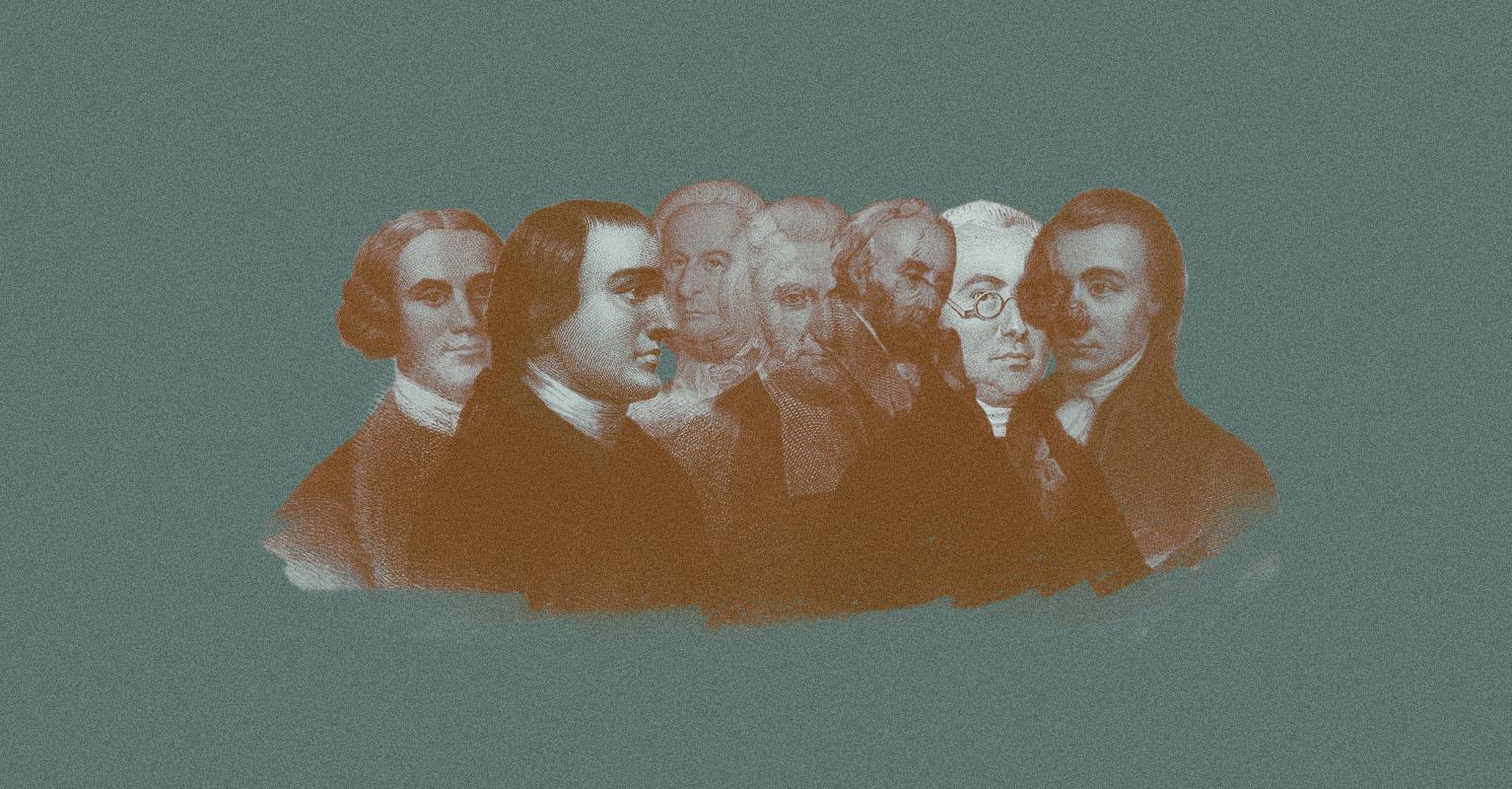
So who were these men? Much is known about a few of them—Benjamin Franklin, John Adams, Thomas Jefferson—and the signature of one man, John Hancock, has become another word for signature itself. But for all their general notoriety as a corporate body, the signers as individuals are now largely unknown. I’d like to remedy that ignorance, just a little, by highlighting one group of signers—a group that is especially important to me as a pastor in the Presbyterian Church in America. I want to look at the twelve Presbyterian signers of the Declaration of Independence, saying a little bit about who they were and then concluding with a few reflections on why Presbyterians were so firmly aligned with the Patriot cause in the Revolution.
A Dozen Presbyterians
Determining the religious affiliation for each signer is not an exact science. The men who gathered in Philadelphia in the summer of 1776 were religiously diverse, though all were various shades of Christian (55 Protestants and one Catholic). Many, perhaps most, were sincere, orthodox Christians (even if not terribly fussy about their theology). Some of the most famous signers were Unitarians or Deists. The vast majority of the delegates can be classified as Anglicans, Congregationalists, or Presbyterians. Although historians don’t agree on how many signers should be placed in each category, a good case can be made that twelve of them were Presbyterian: one from New Hampshire, two from New York, four from Pennsylvania, four from New Jersey, and one from Delaware. We will work our way through the list, moving down the colonies from north to south, citing just the basic facts about each man and highlighting what is known about his connection to Presbyterianism.
New Hampshire (1)
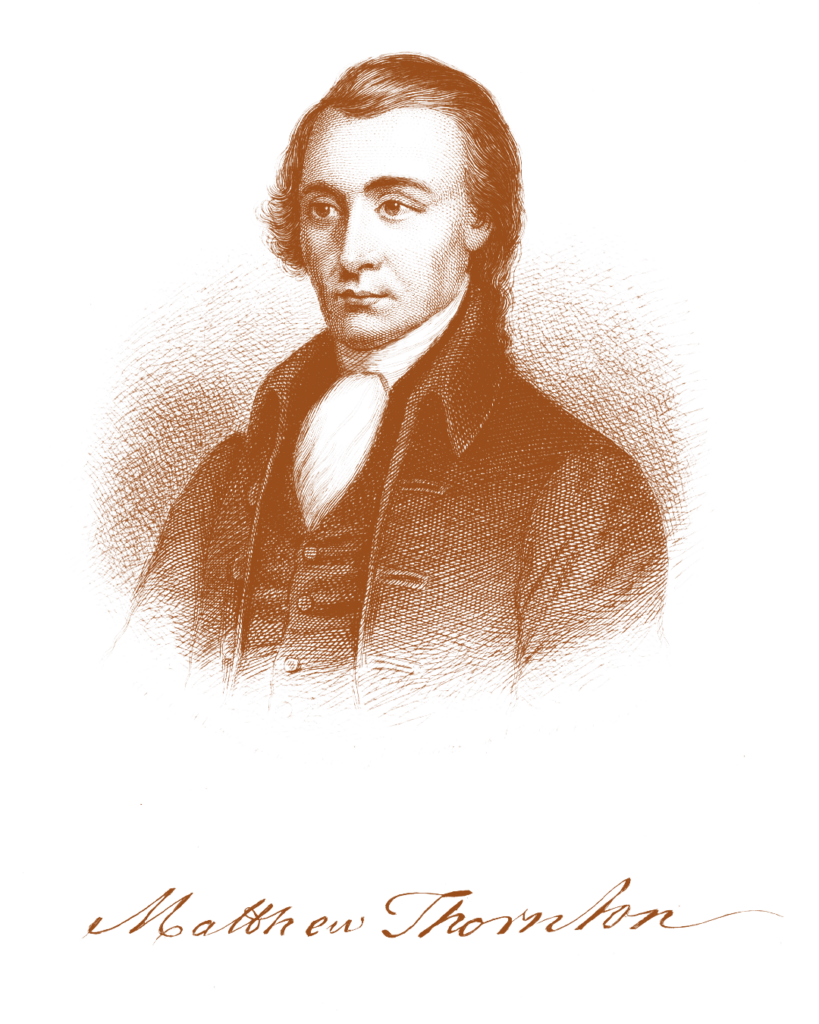
Matthew Thornton (1714–1803) was born in 1714 in northern Ireland (e.g., in the north of Ireland, since Northern Ireland as a country did not yet exist). His family moved to America in 1717, first settling in what would become Maine, then in Massachusetts. As an adult, Thornton lived in Londonderry, New Hampshire, where he worked as a successful physician.
He filled numerous political positions in Londonderry and in New Hampshire, including colonial president, speaker of the house, superior court judge, and delegate to the Continental Congress. He was not in Philadelphia on July 4, 1776, but he signed the Declaration later that fall.
He retired from being a judge in 1782, lived out his last years on a farm in Merrimac, New Hampshire, and died in 1803 at the old age of 89.
Thornton was a consistent and zealous Christian with connections to both parish churches in Londonderry (Congregational and Presbyterian), though his roots were Presbyterian. He owned a pew in the church and contributed out of his wealth to raise the pastor’s salary. When he died, the funeral sermon was preached by Jacob Burnap, the evangelical Reformed minister at the congregational church in Merrimack.
New York (2)
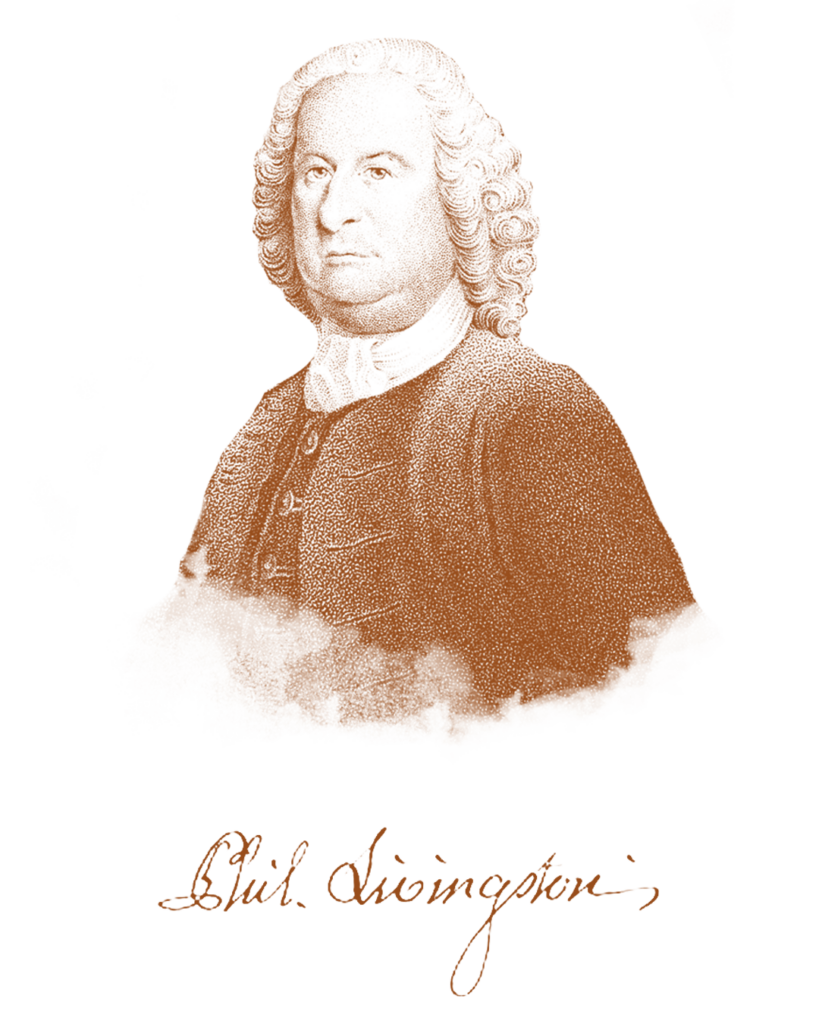
Philip Livingston (1716–1778) was born in Albany, New York, in 1716. He was the only Presbyterian signer to graduate from Yale (the others either did not attend college or went to Princeton). In 1740, Livingston married the daughter of the mayor of Albany; they had four sons and five daughters.
After becoming a successful businessman in New York City, Livingston entered politics in the 1750s. He also helped found King's College (Columbia), was instrumental in starting a library and the chamber of commerce in New York City, was one of the governors of the hospital, oversaw the benevolent society, and established a divinity chair at his alma mater.
Livingston was a member of the Stamp Act Congress, served as president of the provincial congress of New York, and took his seat in the Continental Congress in 1775.
We do not know a great deal about Livingston’s theology or church attendance, but his roots were Presbyterian. His great-grandfather was a distinguished minister in the Church of Scotland. When Livingston died in 1778, the esteemed Presbyterian minister, George Duffield, officiated his funeral.
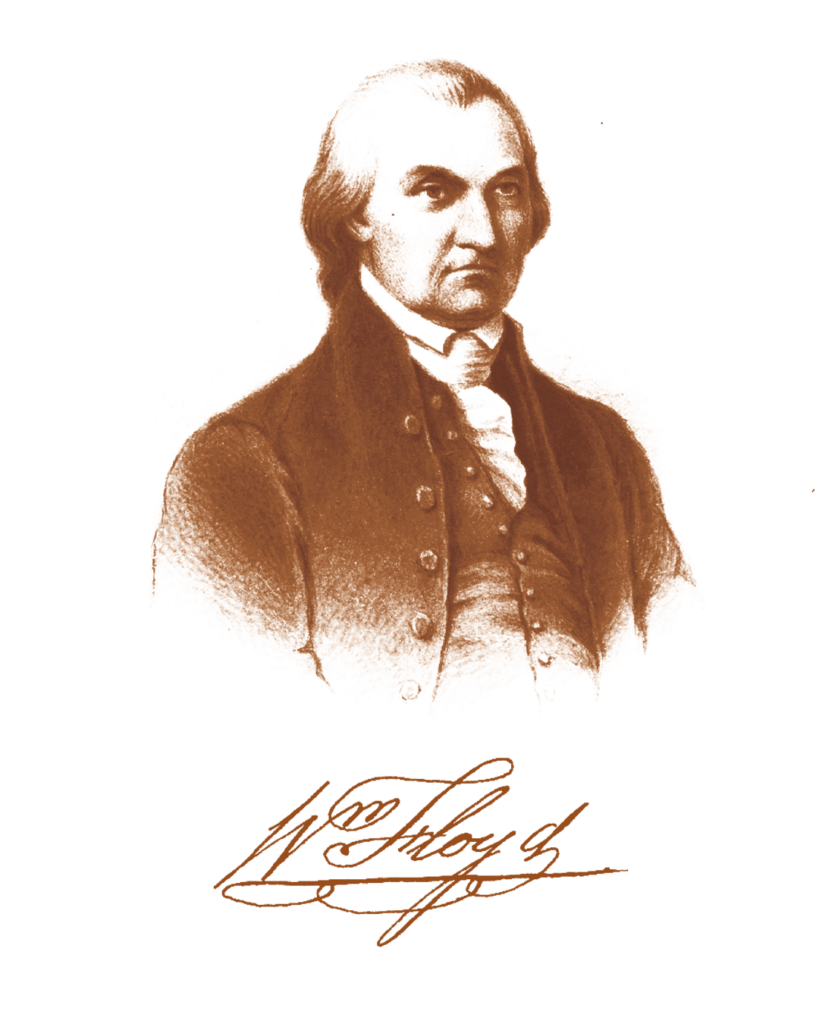
William Floyd (1734 – 1821) was born on Long Island, New York in 1734, though his family background was Welsh. One of eight children, Floyd received little formal education, but he was born into a family of great wealth. He was active in political affairs both in New York and for the new nation. During the war, he was forced to flee his home, leaving behind his vast 4,000-acre estate to be ravaged by the British. He was married twice and had five children.
Floyd was committed to South Haven Presbyterian Church on Long Island, taking an active role in establishing the church, helping fund the church, and serving as an officer in the church (not exactly an elder, but someone who certified the election of members as trustees). One source says, rather laconically, “Mediocre in ability though he might be, he was, nevertheless, for years honored by fellow citizens with offices of trust and respectability.” He died in 1821.
Pennsylvania (4)
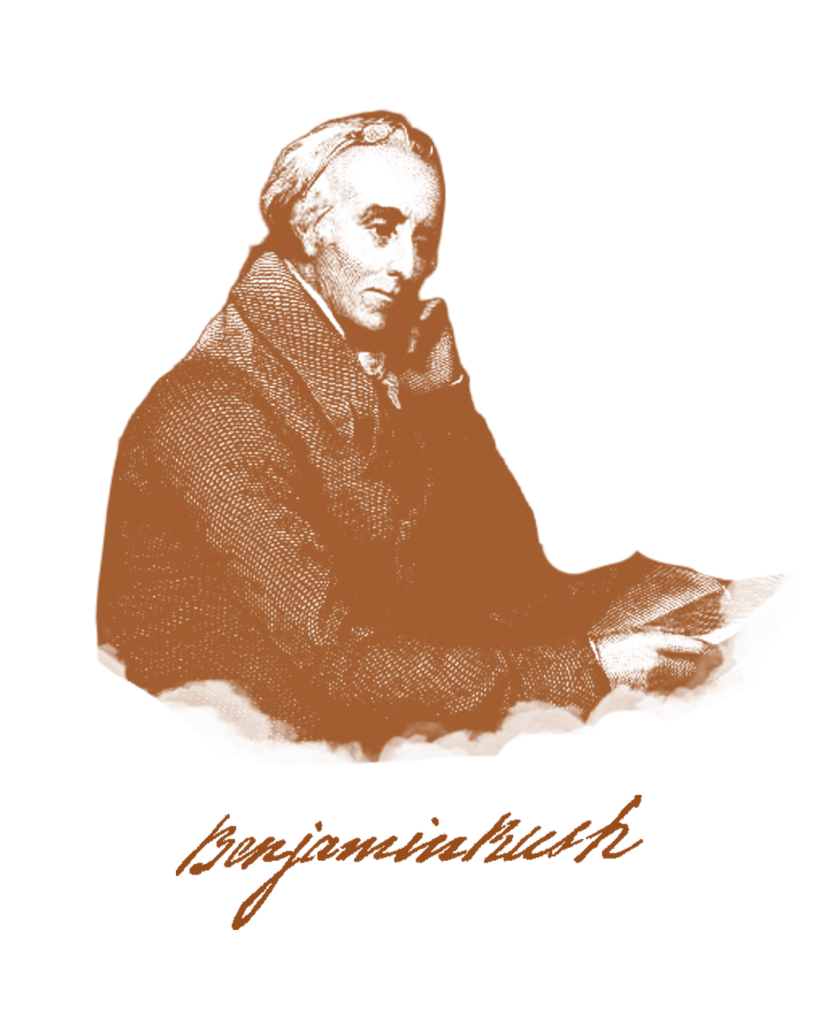
Benjamin Rush (1745–1813) was born in Philadelphia in 1745, the only Presbyterian signer from Pennsylvania to be born in the American colonies. As a boy, he went with his mother to hear the famous Presbyterian revival preacher, Gilbert Tennent. Rush’s early education was with Samuel Finley, the Ulster-born Presbyterian minister and academic. Rush graduated from the College of New Jersey in 1760 and then did a medical internship with one of the elders from Second Presbyterian Church, the New Light congregation in Philadelphia. In 1766, he matriculated at the University of Edinburgh to continue his medical training. While he was there, Rush met with John Witherspoon in order to persuade him to accept the presidency at Princeton.
He returned to America in 1769 and taught chemistry at the College of Philadelphia (now the University of Pennsylvania). He worshiped at First Presbyterian Church (the Old Light congregation). In 1776, Rush married Julia Stockton, the eldest daughter of Richard Stockton, a Princeton trustee and well-connected lawyer from New Jersey. According to Rush, one of the chief reasons he married Julia was because she considered John Witherspoon the best preacher she had ever heard.
Rush did so many things in his life, it is hard to name them all: surgeon in the militia, member of the constitutional ratifying convention for Pennsylvania, and treasurer of the US Mint. He helped establish Dickinson College and helped Philadelphia navigate the yellow fever epidemic. He played a part in founding the Bible Society and was outspoken in his support for the African Methodist Episcopal Church. Throughout his multifaceted career, Rush earned acclaim as a medical doctor, philanthropist, and abolitionist. He signed the Declaration of Independence in August 1776, even though he wasn’t there for the decisive votes in June and July.
As a younger man, Rush evidenced a firm commitment to evangelical Presbyterianism. Later in life, his views became less orthodox, moving from church to church and dabbling with Unitarianism. Rush read the Bible daily and considered himself a Christian, though he died without a strong denominational attachment.
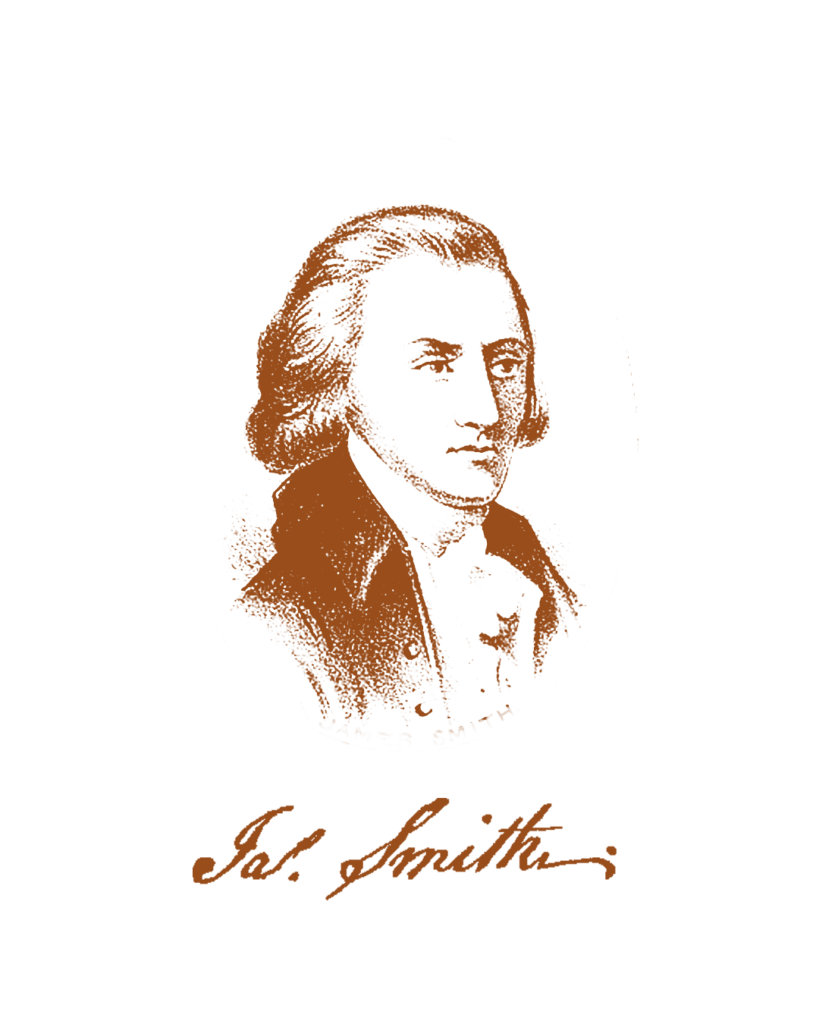
James Smith (c. 1720–1806) was born in northern Ireland around 1720. His family came to America and settled in York County, Pennsylvania. Smith received his early education from Francis Alison, another Presbyterian minister and academic with his own training academy. As an adult, Smith worked as a lawyer, a surveyor, and a manager in iron manufacturing.
As early as 1774, Smith started pushing for the dissolution of political ties with England. Years later, when Philadelphia was occupied by the British, the Board of War met in his offices. He served in the national Congress and later in the Pennsylvania State Assembly.
In 1789, Smith was instrumental in establishing a Presbyterian church in York, Pennsylvania. He signed the call for the first pastor and was an elder in the congregation. We have record of him attending Presbytery meetings as well. When he died in 1801, Smith was buried in the Presbyterian churchyard in York.
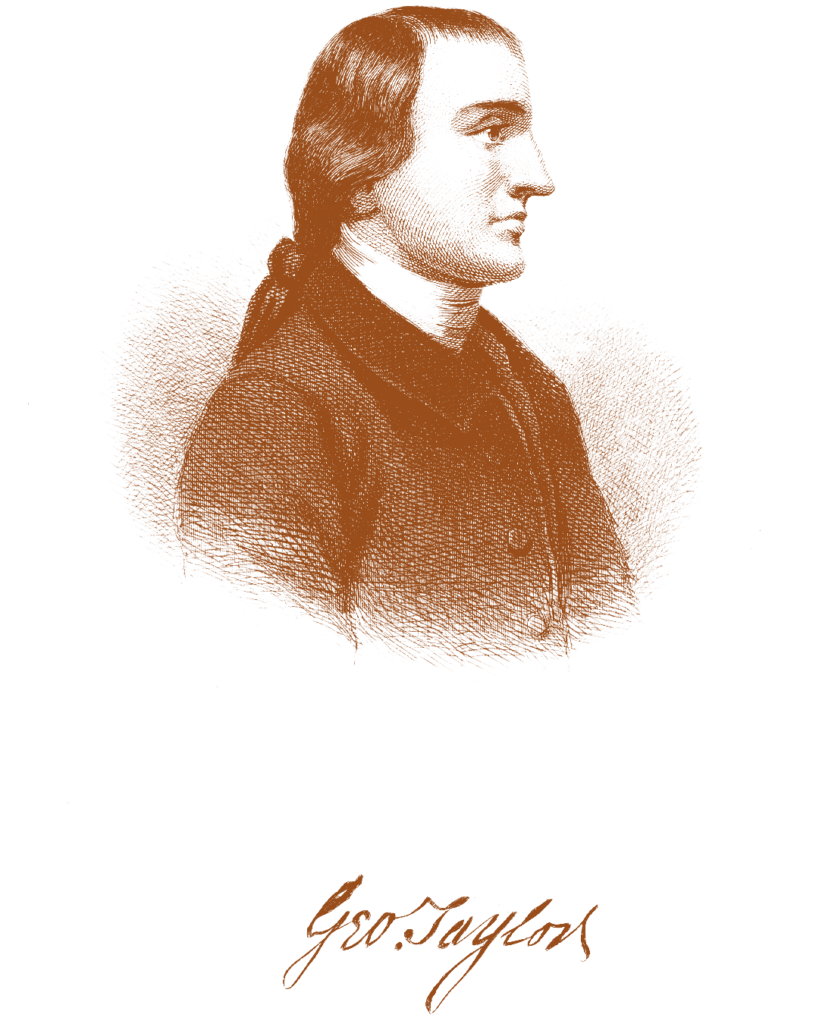
George Taylor (1716–1781) was born in northern Ireland in 1716 and settled in Chester County, Pennsylvania in 1736. He became a successful businessman, running a furnace and forge company.
In 1764, Taylor was elected to the Provincial Assembly. During the war, his company supplied gunshot and ammunition to the Continental Army. He was elected to the Continental Congress after July 4, but signed the Declaration later that summer.
Not surprisingly, given his Scots-Irish roots, Taylor’s church background was Presbyterian. In 1765, he gave a plot of land to the Presbyterian minister in Bucks County. When he died in 1781, Taylor was buried in a Lutheran cemetery, though it seems likely he had been a member of Red Hill Presbyterian Church.
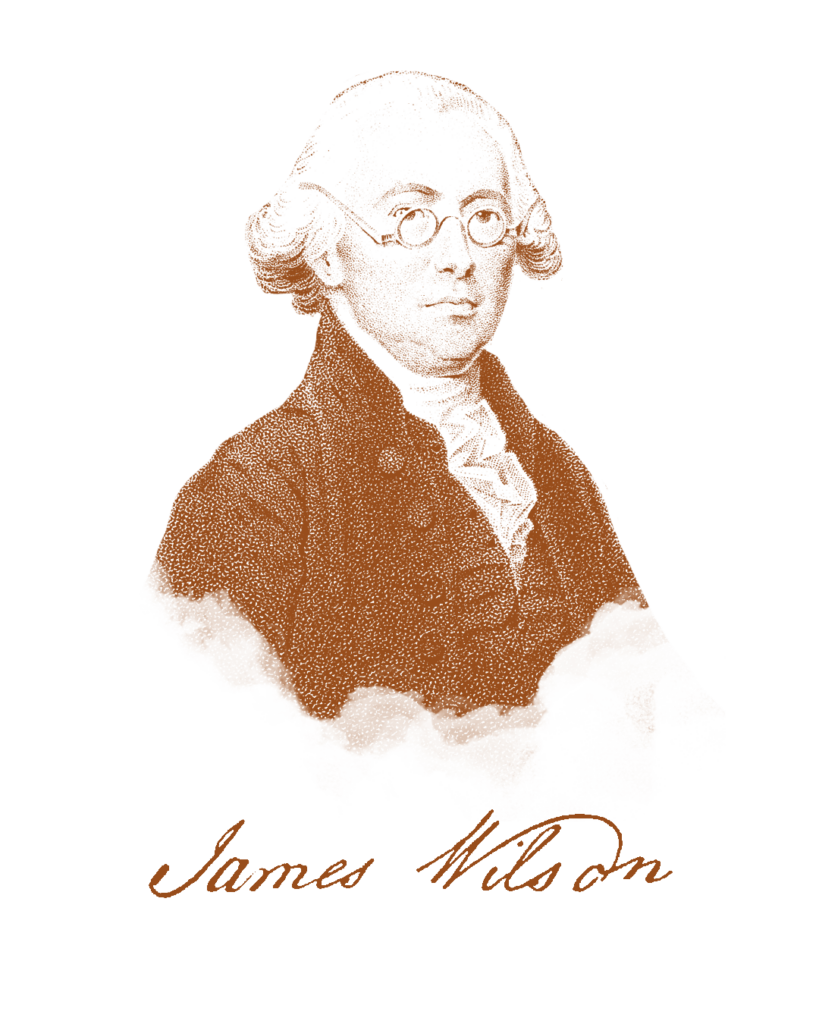
James Wilson (1742–1798) was born in Scotland in 1742 in Carskerdo, a small town near St. Andrews. One of the best educated of the signers, Wilsdon attended three Scottish universities from 1757 to 1765: St. Andrews, Glasgow, and Edinburgh.
In a recent book on America’s Forgotten Fathers, the authors surveyed 45 historians to ask which men and women played significant roles in the founding of America but are now largely overlooked. They accumulated an initial list of 73 names and then voted on that list to come up with a top ten. By far the number one vote-getter was James Wilson (the other nine names, in order: George Mason, Gouverneur Morris, John Jay, Roger Sherman, John Marshall, John Dickinson, Thomas Paine, Patrick Henry, John Witherspoon).
Wilson came to America in 1766 and began lecturing at the College of Philadelphia. He then turned his attention to law. He married Rachel Bird of Birdsboro in 1771. Around the same time, he formed a corporation with 11 other men to establish the First Presbyterian Church in Carlisle. Later, Wilson owned a pew at First Presbyterian Church in Philadelphia and became one of the church’s most significant financial backers.
Wilson played a key role in adopting the Declaration and was also instrumental in the adoption of the Constitution. In 1789, Wilson was appointed to the Supreme Court by George Washington. In his last years, Wilson lost vast sums of money in land speculation and spent the end of his life in poverty. He died in 1798 in the home of his friend, and Supreme Court justice, Judge James Iredell, while on a judicial circuit in North Carolina.
New Jersey (4)
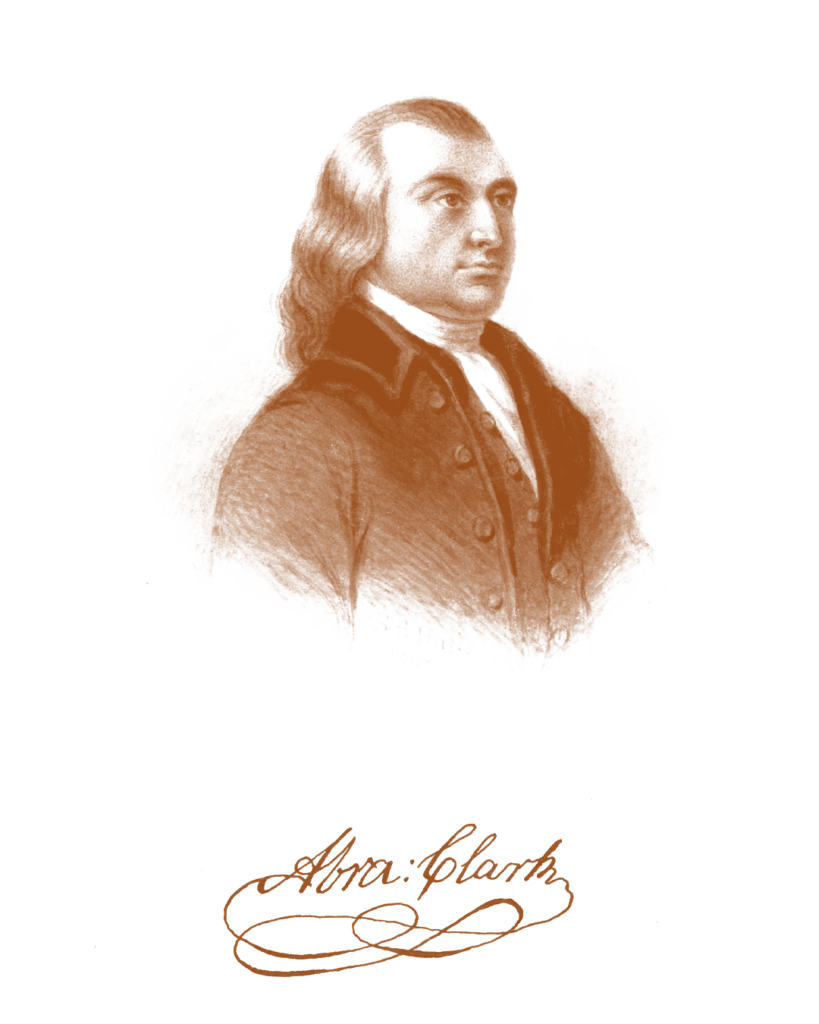
Abraham Clark (1726–1794) was born in Elizabethtown, NJ (now Elizabeth, NJ) in 1726, the only child of his parents. He was baptized as an infant by the well-known Presbyterian pastor Jonathan Dickinson.
Although Clark received no formal education, he taught himself law and built up a successful legal career. He held several political offices, including sheriff of Essex County. He was a member of the Committee of Safety in Elizabethtown, where he pushed the people toward independence. He served in the Continental Congress and in the New Jersey state legislature.
Clark was a member of the Presbyterian church in Elizabethtown, pastored by James Caldwell. Caldwell was known as the “Fighting Parson” because he served with the army during the war. Tragically, his wife was shot by British troops when she was inside her home with their children. In 1781, Caldwell was murdered by a sentry, leaving behind nine orphaned children.
Clark was a trustee at the church in Elizabethtown for four years. He died in 1794 and was buried in the Presbyterian churchyard in Rahway, New Jersey.
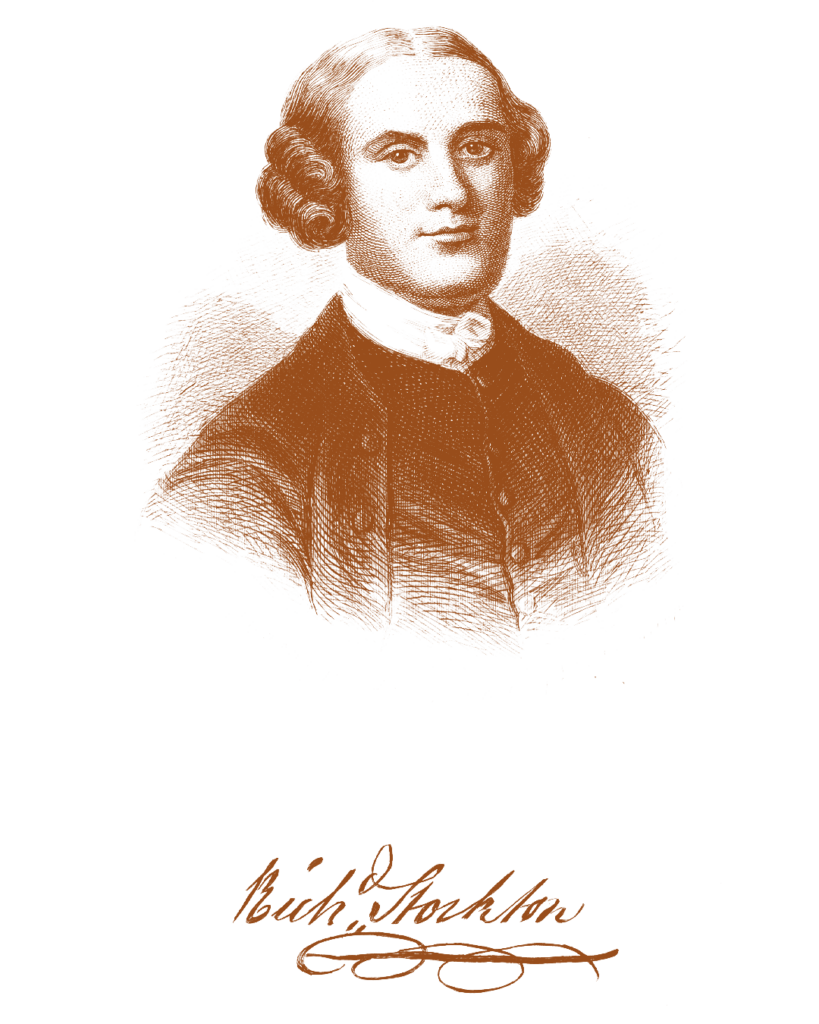
Richard Stockton (1730–1781) was born in 1730 into a family of wealth and privilege. His father served as a judge and was instrumental in getting the College of New Jersey to move to Princeton.
Richard received his early education from the Presbyterian minister Samuel Finley. He graduated from the College of New Jersey (later Princeton) in 1748, then studied law and began his practice in 1754. He was a key member of Princeton's board of trustees from 1757 until his death in 1781.
Stockton was the driving force behind raising funds for a church building for the Presbyterian congregation in Princeton. He was close to John Witherspoon and was a member and trustee of the church where Witherspoon served as de facto pastor.
The Stockton family was well-connected and enmeshed in the Presbyterian church. Richard’s wife, Annis, was the sister of Elias Boudinot, the president of the Continental Congress during the final years of the war and the first president of the Trustees of the General Assembly of the Presbyterian Church USA. Boudinot married Stockton’s sister, Hannah. Stockton’s eldest daughter, Julia, married Benjamin Rush.
Stockton died in 1781. The funeral sermon was preached by the Presbyterian minister (and Witherspoon’s son-in-law) Samuel Stanhope Smith.
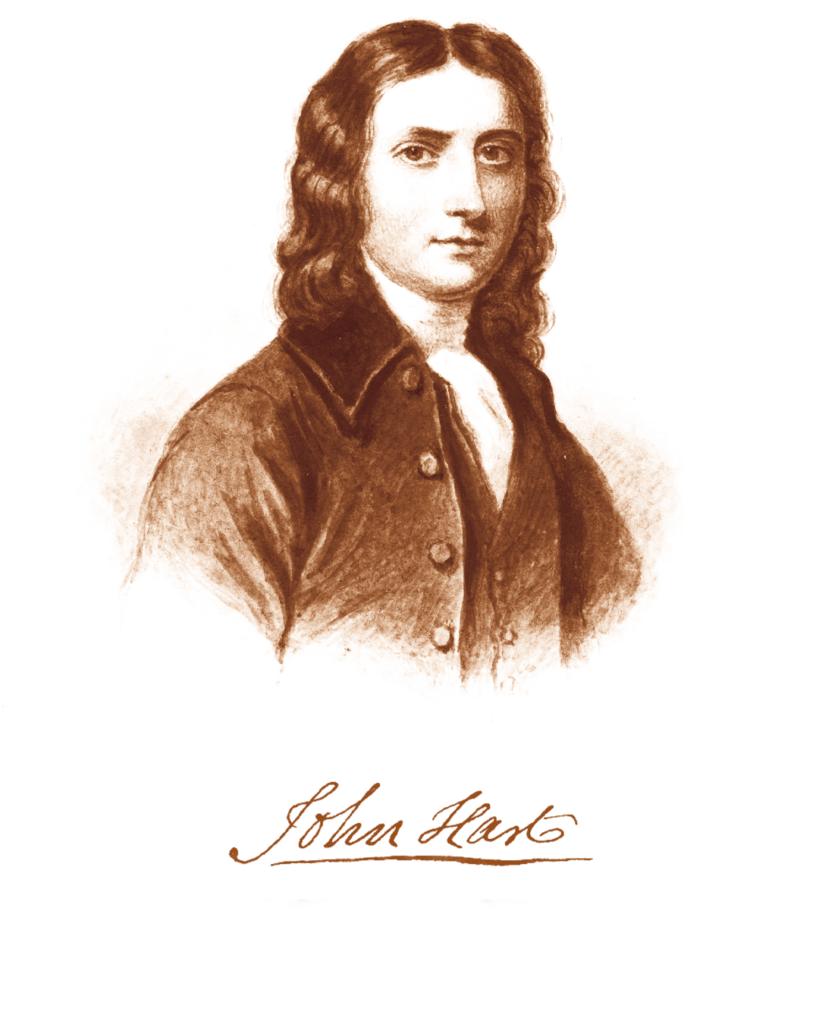
John Hart (1711–1779) was born in 1711 in Stonington, Connecticut. He received almost no formal education, but he rose to become a justice of the peace, then a judge, then a member of Congress. During the time of the Battles of Trenton and Princeton, his home had to be abandoned, causing harm to his property and to his family.
In 1735, Hart was received into membership at Hopewell Presbyterian Church, west of Princeton. Records indicate almost continuous financial support of the church after this date. When he died in 1779, Hart’s body was buried in a private plot, but was later moved to Hopewell Baptist Church, which had received a deed for its property from Hart years earlier.
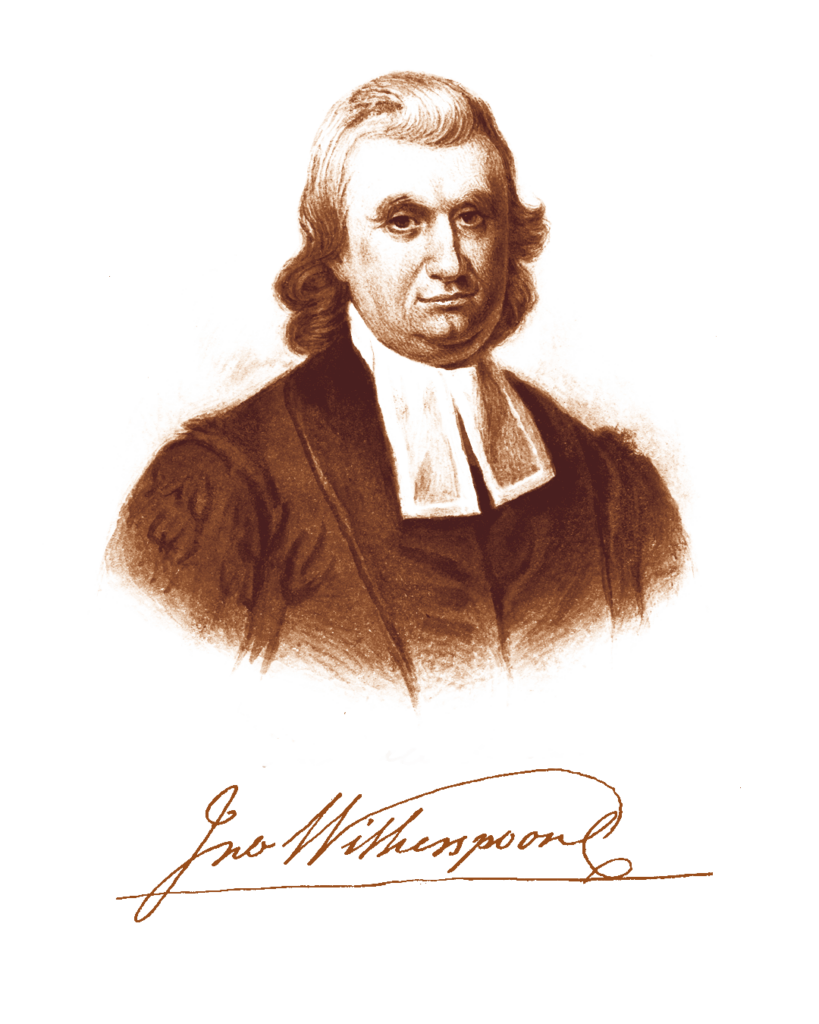
John Witherspoon (1723–1794) was born in 1723 in Scotland, in the small village of Gifford, with a Presbyterian pastor for his father, and on his mother’s side a direct line of descent from John Knox.
Witherspoon was ordained in 1745 and served two congregations in Scotland (in Beith and in Paisley) before emigrating to the American colonies in 1768 to become the president at the College of New Jersey. On both sides of the Atlantic, Witherspoon flourished as an author, thinker, educator, denominational leader, and controversialist. Although he enjoyed a successful ministerial career in Scotland—with numerous books and honors to his credit—Witherspoon is now most well-known for the American half of his career, where he was the only clergyman to sign the Declaration of Independence.
Witherspoon accomplished as much as four men insofar as he really had four careers: local church pastor, college president, congressman and founding father, and leader in the establishment of the Presbyterian Church USA.
As a local church pastor in the Church of Scotland, Witherspoon proved to be an effective evangelical preacher and writer, often railing against the doctrinal declension of the Moderate wing of the Kirk. His church in Paisley, which had to be expanded to accommodate the growing congregation, could seat 1,300 worshipers.
As Princeton’s president, Witherspoon set the college on firm financial footing and established it as one of the leading institutions in the new republic. Witherspoon personally instructed an entire generation of educators, legislators, and statesmen. Of his 469 graduates, 114 became ministers. 14 became college presidents, and 13 went on to serve as governors. A list of his Princeton graduates includes: twelve members of the Continental Congress, five delegates to the Constitutional Convention, one U.S. president (James Madison), one vice president (Aaron Burr), forty-nine representatives, twenty-eight senators, three Supreme Court justices, eight district judges, one secretary of state, three attorneys general, and two foreign ministers.
As a politician, Witherspoon argued for classic liberalism, free markets, a stronger federal government, and a virtuous citizenry. He was one of only 16 men to sign both the Declaration of Independence and the Articles of Confederation.
As a philosopher, Witherspoon introduced hundreds of students to the best Enlightenment thinkers and tried to show how reason was compatible with revelation.
As a theologian, Witherspoon was staunchly Presbyterian, doing more than any single person to establish a national Presbyterian church in the United States. He served on all the key committees (including the one that revised the Westminster Standards) and wrote the Preliminary Principles still in use by various Presbyterian denominations today. Throughout his life, he was a gospel-minded, confessional Presbyterian.
Few Christians in the eighteenth century wore as many vocational hats and accomplished as much in so many different fields as John Witherspoon. He died in 1794, having been married twice and fathering a total of 12 children, most of whom preceded him in death.
Delaware (1)
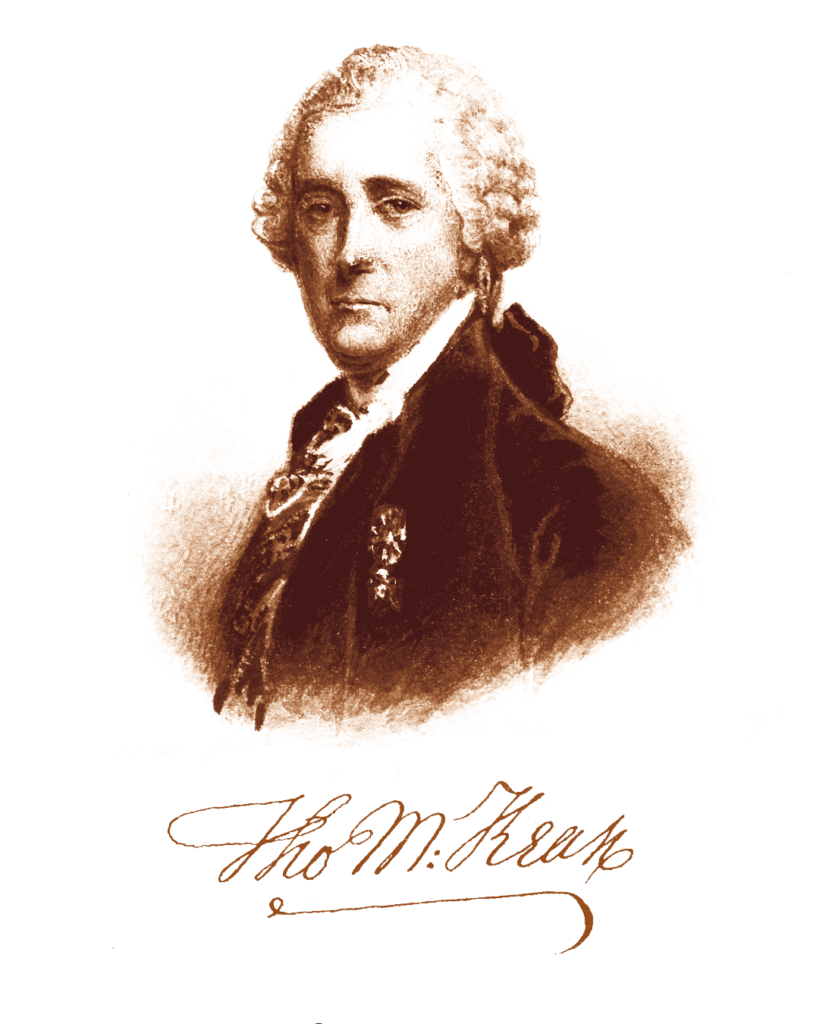
Thomas McKean (1734–1817) was born in Chester County, Pennsylvania in 1734. He received his early education from Francis Alison.
McKean studied law and eventually served in the Delaware Assembly, where he became a strong opponent of the Stamp Act and an influential member in forming Delaware’s constitution. In 1777 he became acting president of Delaware, until he was named, in the same year, as chief justice in Pennsylvania.
McKean was married twice, to Mary Borden and then to Sarah Armitage. He had 11 children. The second marriage to Sarah was performed by the Presbyterian minister Joseph Montgomery.
On October 2, 1774, McKean's name was entered in the rolls as a member of First Presbyterian Church in Philadelphia. He contributed financially to the church, and together with fellow signers James Wilson and Benjamin Rush contributed generously to restore the church building after it had been damaged in the war.
McKean served as chief justice in Pennsylvania for 22 years. He died in 1817 and was buried in the graveyard of First Presbyterian Church. He was well known throughout his adult life as a devout Christian and committed Presbyterian.
Concluding Reflections
What can be said about these twelve men as a group?
For starters, they were almost all from the Middle Colonies, where Presbyterianism first landed in the colonies and where it continued to be most numerous. Not surprisingly for a group of Presbyterians, most of them were Scottish or Scots-Irish, with five of the twelve born outside the American colonies (three in the Ulster region of Ireland and two in Scotland).
All of them were married; at least five were married twice. With the exception of Abraham Clark, they all had at least five children.
The Presbyterian signers were on the older side of the delegation in Philadelphia. Their average age in 1776 was 51 years old, when most of the signers were in their 30s or 40s (Jefferson was only 33; Franklin was the old man of the group at 70; Edward Rutledge was the youngest at 26). As older men, they had more to lose than many of the other signers. Signing the Declaration came with significant risks. Many of them suffered business loss, property loss, even the loss of children because of the revolution. When they pledged their fortunes, they meant it.
Not every Presbyterian listed above evidenced the same level of Christian commitment, though all of them left behind a record of church involvement. With the exception of Witherspoon, we don’t know a lot about what they believed. After all, they weren’t ministers or theological writers. It’s possible that some of them were connected to the Presbyterian church out of mere custom or family tradition. At least one man, Benjamin Rush, drifted away from his earlier convictions. At the same time, we shouldn’t undersell their Christian commitment either. We know that several of the men were zealous Christians. It’s also important to remember that, unlike in Scotland, where the church was already divided between the Popular Party (evangelicals) and the Moderate Party, the Presbyterian congregations in the United States did not yet suffer from the theological declension. The lingering divisions in American Presbyterianism had to do with the revivals, not with the acceptance of the Westminster Confession. There were no Unitarian Presbyterian churches, only varying shades of confessional Calvinism.
Of all the religious groups in America, the Presbyterians were the most uniformly and most vigorously supportive of independence. At one point, King George III called the revolution a “Presbyterian war.” The reasons that Presbyterians overwhelmingly supported the “Glorious Cause” are manifold. Ethnically, most Presbyterians in America were Scots-Irish, which meant they had a long history of distrusting the English and were dispositionally ready (eager?) for a fight. Ecclesiastically, the polity of Presbyterianism made them better prepared for a democratic and representative government; it also made them preternaturally alarmed by the threat of episcopacy. Theologically, their belief in the liberty of conscience came to be expressed in America as a zeal for new levels of religious freedom and a passion that the state not interfere in the least with the affairs of the church.
It was the connection between civil liberty and religious liberty that most galvanized the Presbyterians. They believed that independence was necessary for the protection of their inalienable rights and liberties—rights that were granted by nature and by nature’s God, and liberties that had been theirs since the Glorious Revolution but were being trampled upon by a recalcitrant king and a tyrannical parliament. “There is not a single instance in history in which civil liberty was lost, and religious liberty preserved entire,” Witherspoon proclaimed in his famous sermon at Princeton in May of 1776. “If therefore we yield up our temporal property, we at the same time deliver the conscience into bondage.” Witherspoon’s moral logic was shared by virtually all Presbyterians. Thus, even if the twelve Presbyterians who signed the Declaration were taking a risk in terms of their professional career and personal well-being, they knew they were not taking an ecclesiastical risk. They had the support of their churches and their fellow churchmen. As an agent for the colonial secretary wrote in 1776, “Presbyterianism is really at the bottom of the whole conspiracy, has supplied it with vigor, and will never rest, till something is decided upon.”
- Most of the biographical information is drawn from William B. Miller, “Presbyterian Signers of the Declaration of Independence,” Journal of the Presbyterian Historical Society, September 1958, 139-179. I also consulted B.J. Lossing’s Lives of the Signers of the Declaration of American Independence (1870), John Sanderson’s 9-volume Biographies of the Signers to the Declaration of Independence (1820–27), as well as more recent biographies and reference works.
This article is adapted from the lecture "Presbyterians and 1776, Part II"
Kevin DeYoung is the senior pastor at Christ Covenant Church (PCA) in Matthews, North Carolina and associate professor of systematic theology at Reformed Theological Seminary.
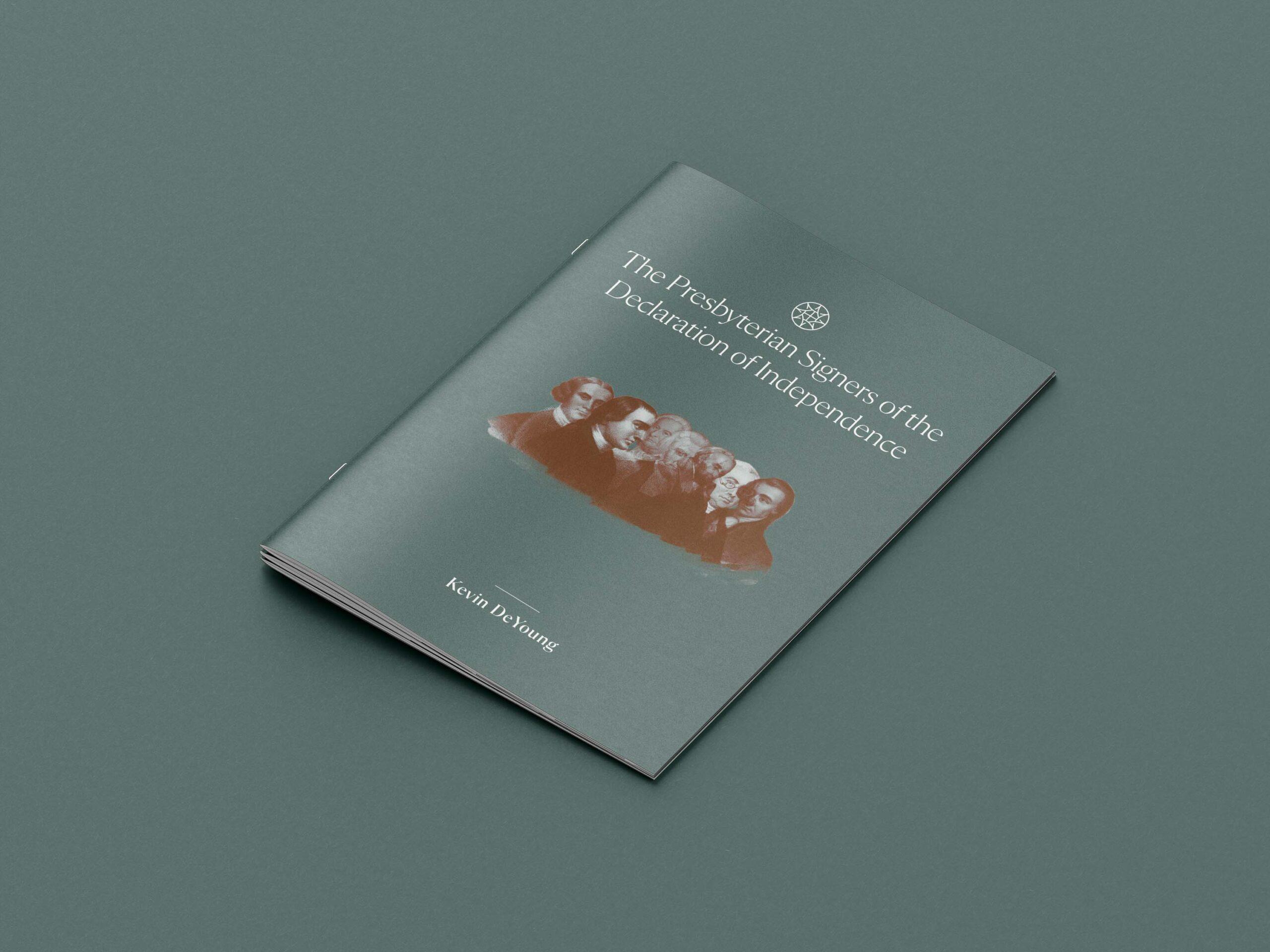
To become a book club member and receive a copy of Kevin DeYoung's new booklet releases, set up a monthly recurring donation of any amount.
Subscribe
Get new resources like this delivered to your inbox.